
 By career market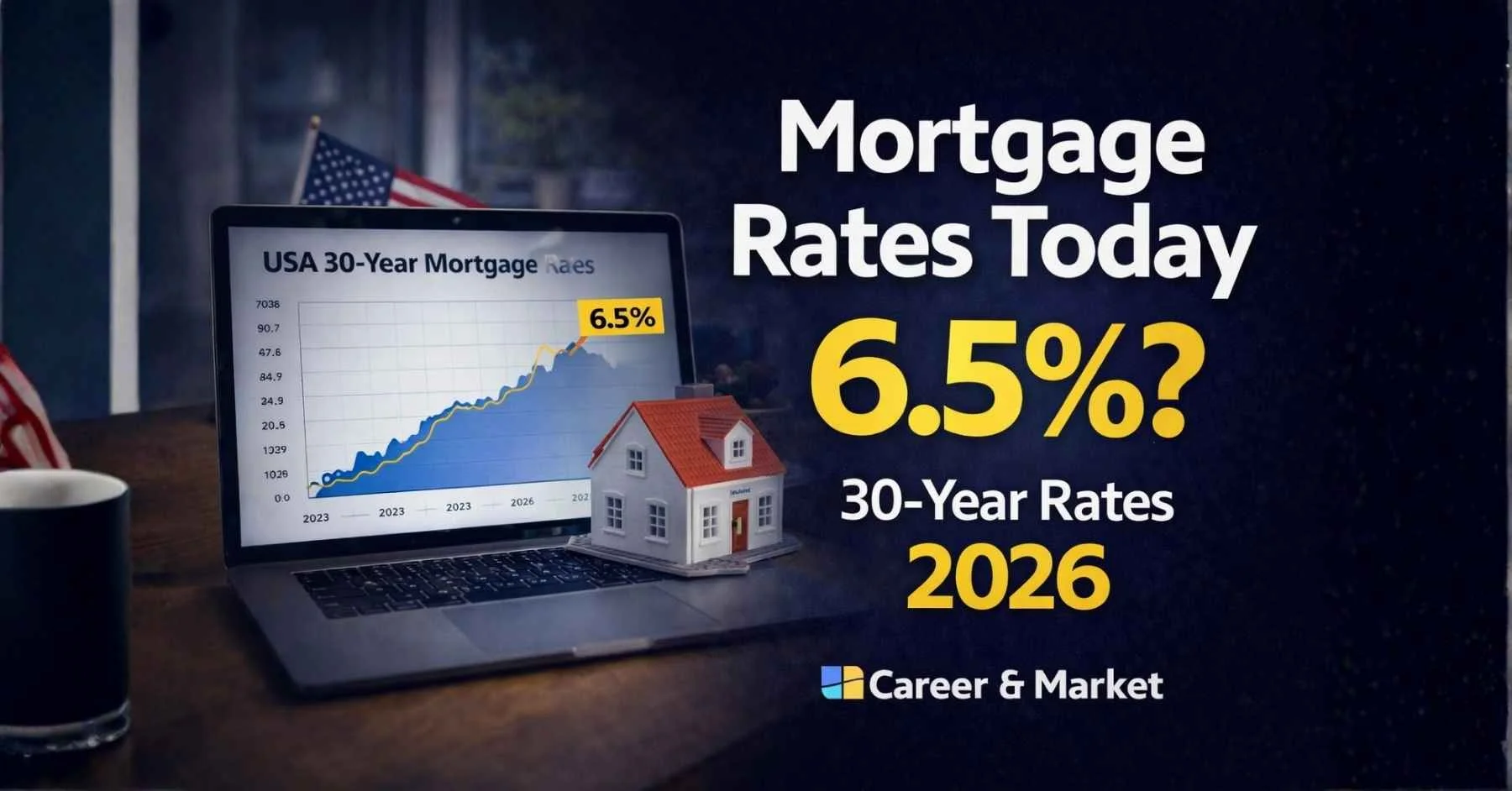
As we navigate the early months of 2026, the American housing market faces a unique financial landscape. Many families find that borrowing costs remain above the six percent threshold, which significantly alters home affordability for millions of buyers.
Understanding mortgage rates today is essential for anyone planning a property purchase this year. Whether you are a first-time buyer or looking to refinance, staying informed helps you make smarter long-term investment choices.
The 30 year mortgage rate serves as a primary benchmark for the industry. By tracking these shifts, you can better prepare your budget for the volatility seen in the current mortgage rates environment. Knowledge remains your best tool for securing a stable financial future in the current mortgage rates usa market.
Key Takeaways
- Home loan interest levels are holding steady above 6% in early 2026.
- High borrowing costs directly impact the purchasing power of prospective buyers.
- Monitoring market fluctuations is vital for making sound financial decisions.
- Refinancing options remain a popular strategy for managing existing debt.
- Staying educated on economic trends helps navigate a complex housing climate.
The Current Landscape of Mortgage Rates Today
The financial landscape for homeowners in 2026 is defined by a unique set of economic pressures that directly impact borrowing costs. As you explore your options, you will find that current mortgage rates fluctuate based on a delicate balance of national and global factors. Understanding these shifts is essential for anyone planning a major real estate purchase this year.
Economic Context for 2026
The broader economy in 2026 continues to influence the cost of borrowing money for residential properties. Inflation trends and Federal Reserve monetary policies remain the primary drivers behind the movement of today’s mortgage rates. When the economy shows signs of cooling, lenders often adjust their offerings to reflect the changing risk profile of the market.
Investors closely monitor bond yields, as these figures serve as a benchmark for long-term lending. Because mortgage rates today are tied to the performance of mortgage-backed securities, even minor shifts in investor confidence can lead to daily volatility. Staying informed about these macroeconomic indicators helps you anticipate potential changes before you lock in your loan.
How Rates Are Calculated
Lenders do not pull interest rates out of thin air; they use a complex formula to determine the risk associated with each applicant. Your personal financial profile plays a significant role in the final quote you receive from a bank or broker. Factors such as your credit score, the size of your down payment, and the specific loan term all contribute to the final percentage.
It is helpful to view these variables as a sliding scale that determines your eligibility for the best current mortgage rates. By improving your credit score or increasing your down payment, you can often secure more favorable terms. The following table outlines how different borrower characteristics influence the final interest rate offered by lenders.
| Borrower Factor | Impact on Rate | Strategy for Improvement |
|---|---|---|
| Credit Score | High impact | Pay down existing debt |
| Down Payment | Moderate impact | Save for 20% equity |
| Loan Term | Low impact | Choose shorter durations |
| Market Volatility | High impact | Monitor today’s mortgage rates |
Ultimately, mortgage rates today are a reflection of both your individual financial health and the state of the national economy. By focusing on the factors within your control, you can position yourself to secure the most competitive financing available. Always remember that knowledge is your greatest asset when navigating the complexities of the modern housing market.
Understanding Current Mortgage Rates in the USA
Your journey toward homeownership is heavily influenced by the fluctuating landscape of home loan rates in the USA. Navigating this financial terrain requires more than just checking a daily ticker; it involves understanding the underlying mechanics that dictate your borrowing costs.
By grasping how these numbers shift, you can make more informed decisions about your future. Whether you are a first-time buyer or a seasoned investor, clarity is your greatest asset in this market.
The 30-Year Fixed Rate Standard
The 30-year mortgage rate remains the most popular financing vehicle for American homeowners. This product offers the security of a predictable monthly payment that never changes over the life of the loan. Because the interest rate is locked in at the start, you are protected from the volatility of the broader economy.
“The stability of a fixed-rate mortgage provides a foundation for long-term financial planning that few other investment vehicles can match.”
Most borrowers prefer this option because it keeps housing costs manageable over three decades. While other products exist, the consistency of this standard remains a cornerstone of the American housing market.
Variations Based on Credit Profiles
It is important to remember that current mortgage rates are not one-size-fits-all. Lenders evaluate your individual credit profile to determine the level of risk you represent. A higher credit score typically unlocks access to more competitive interest rates, potentially saving you thousands of dollars over time.
Conversely, a lower score may lead to higher premiums as lenders attempt to offset potential default risks. Improving your credit health before applying is one of the most effective ways to secure better terms on your loan.
Regional Differences in Lending
You might notice that current mortgage rates usa vary significantly depending on where you live. Economic disparities between states, such as local housing demand and state-specific regulations, play a major role in how lenders price their products.
For instance, a lender in a high-growth urban area may offer different terms than one in a rural market. Always research the specific conditions in your region to ensure you are receiving a fair offer on your home loan rates usa.
30-Year vs 15-Year Mortgage Rates
Deciding between a 30-year and 15-year mortgage is one of the most significant financial choices a homeowner will make. While 15 year mortgage rates are typically lower than their 30-year counterparts, the decision involves more than just the interest percentage. You must weigh your immediate cash flow needs against your desire to build home equity rapidly.
Analyzing Long-Term Interest Costs
A mortgage rate comparison reveals that shorter terms save borrowers a substantial amount of money over the life of the loan. Because you pay off the principal faster, you accrue less interest over time. This strategy effectively turns your home into a forced savings account with a guaranteed return equal to your interest rate.
However, this path requires a higher level of financial discipline. You are committing to a larger payment every month to ensure the debt is cleared in half the time. For many, the long-term savings justify the tighter budget during the early years of homeownership.
Monthly Payment Implications
The monthly mortgage payment usa standard is heavily influenced by the chosen loan term. A 30-year mortgage offers a much lower monthly obligation, which provides homeowners with more flexibility in their daily budget. This extra cash can be directed toward other investments, emergency savings, or home improvements.
Conversely, a 15-year loan demands a significantly higher monthly commitment. If your income is stable and you have a solid financial cushion, this might be a smart move. If your income fluctuates, the lower payment of a 30-year term acts as a safety net against unexpected life events.
Choosing the Right Term for Your Financial Goals
To make an informed decision, you should use a mortgage rate calculator to see how different terms affect your specific situation. Consider your long-term goals, such as retirement planning or funding education, when selecting your term. If your primary goal is to be debt-free before retirement, the 15-year option is often superior.
If you prefer to maximize your liquidity and invest in other assets, the 30-year term might align better with your strategy. Ultimately, your choice should reflect your personal risk tolerance and your comfort level with monthly debt obligations.
| Feature | 30-Year Mortgage | 15-Year Mortgage |
|---|---|---|
| Monthly Payment | Lower | Higher |
| Total Interest Paid | Higher | Lower |
| Equity Growth | Slower | Faster |
| Budget Flexibility | High | Low |
Refinance Rates Explained
Refinancing your home can be a powerful tool for managing your long-term financial health. By replacing your existing loan with a new one, you may be able to lower your monthly payments or change your loan duration. Keeping an eye on refinance rates today is the first step in determining if this strategy aligns with your personal budget.

When Does Refinancing Make Financial Sense?
Refinancing is generally most advantageous when you can secure a lower rate than your current one. Many experts suggest that a reduction of at least 0.75% to 1% in mortgage interest rates makes the effort worthwhile. However, you should also consider your long-term plans for the property before moving forward.
If you intend to stay in your home for many years, the long-term savings often outweigh the initial costs. Conversely, if you plan to sell soon, the upfront fees might not be recovered in time. Always evaluate your current interest rates against the costs of originating a new loan.
Break-Even Analysis for Homeowners
A break-even analysis is a simple calculation that helps you decide if a new loan is a smart move. You divide the total closing costs by the amount you save on your monthly payment. The resulting number tells you how many months it will take to recover your investment.
For example, if your closing costs are $3,000 and you save $150 per month, your break-even point is 20 months. If you plan to live in the house longer than that, the refinance is financially beneficial. This data-driven approach removes the guesswork from your decision-making process.
Cash-Out Refinancing vs Rate-and-Term
Homeowners typically choose between two primary types of refinancing based on their specific needs. A rate-and-term refinance focuses solely on changing your interest rate or the length of your loan. This is ideal for those looking to reduce their monthly obligations or pay off their debt faster.
In contrast, a cash-out refinance allows you to borrow against your home equity to receive a lump sum of cash. This is often used for home improvements or consolidating high-interest debt. Understanding the difference between these options is vital for managing your mortgage interest rates effectively.
| Refinance Type | Primary Goal | Equity Impact |
|---|---|---|
| Rate-and-Term | Lower monthly payments | Maintains current equity |
| Cash-Out | Access home equity | Reduces total home equity |
| Shortening Term | Pay off loan faster | Builds equity more quickly |
Ultimately, comparing current interest rates requires a clear understanding of your financial goals. Whether you want to save money or access cash, careful planning ensures you make the right choice for your future.
Primary Factors Affecting Mortgage Rates
Grasping the mechanics of the economy is essential for anyone tracking current mortgage rate trends. While individual financial health matters, broader macroeconomic forces often dictate the baseline costs for borrowers across the United States.
These external pressures create a ripple effect that touches every corner of the real estate market. Understanding these drivers can help you anticipate shifts in mortgage interest rates before they happen.
Federal Reserve Monetary Policy
The central bank plays a pivotal role in the financial ecosystem. When the Federal Reserve interest rates change, they influence the cost of short-term borrowing for banks.
While the Fed does not set mortgage rates directly, their policy decisions signal the direction of the economy. Lenders often adjust their pricing in anticipation of these shifts to maintain profitability and manage risk.
Inflation Trends and Bond Yields
Inflation acts as a major enemy to fixed-income investments like mortgage-backed securities. When prices rise, investors demand higher yields on bonds to offset the loss of purchasing power.
Because mortgage rates are closely tied to the yield on the 10-year Treasury note, rising inflation usually pushes borrowing costs upward. Monitoring these mortgage rate trends provides a clear window into where long-term interest costs are heading.
Housing Market Supply and Demand
The fundamental principle of supply and demand remains a powerful force in the housing sector. When inventory is low and buyer competition is high, lenders may feel less pressure to offer aggressive discounts on mortgage interest rates.
Conversely, a surplus of homes can lead to more competitive lending environments. Federal reserve interest rates are only one piece of the puzzle; the local and national appetite for homeownership ultimately determines how much you will pay to finance your property.
The Impact of Credit Scores and Down Payments
When you apply for a home loan, your credit history and equity position tell a story to the lender. This narrative determines the specific home loan rates usa you are offered during the underwriting process. Lenders view these metrics as indicators of your reliability and long-term financial stability.

How Lenders Assess Borrower Risk
Lenders use sophisticated models to calculate the risk of lending money to a specific individual. Your credit score serves as the primary data point in this evaluation, reflecting your history of managing debt. A higher score signals to the bank that you are a low-risk borrower, which often leads to more favorable terms.
Beyond credit scores, lenders examine your debt-to-income ratio to ensure you can comfortably manage monthly payments. They want to see that your total monthly debt obligations do not consume too much of your gross income. Maintaining a healthy balance here is essential for securing the best mortgage rates available in the current market.
“Financial preparation is the most powerful tool a homebuyer possesses. By cleaning up your credit report and saving for a larger down payment, you effectively buy yourself a lower interest rate over the life of the loan.”
— Mortgage Industry Analyst
The Role of Loan-to-Value Ratios
The loan-to-value (LTV) ratio measures the size of your loan against the appraised value of the property. A larger down payment reduces your LTV, which decreases the lender’s exposure to potential loss. When you put more money down, you are essentially investing in your own security and lower borrowing costs.
Lower LTV ratios often allow borrowers to avoid private mortgage insurance, which adds an extra monthly expense. By keeping your LTV low, you position yourself to access the lowest mortgage rates, as the lender views the loan as a safer investment. This simple shift in equity can save you thousands of dollars over the duration of your mortgage.
Strategies to Improve Your Interest Rate
You can take proactive steps to optimize your financial profile before submitting an application. Start by reviewing your credit reports for errors and paying down high-interest revolving debt to improve your utilization ratio. These small adjustments can lead to significant improvements in your credit score within a few months.
Consider the following table to understand how credit score tiers generally influence the interest rates offered by lenders:
| Credit Score Range | Risk Assessment | Rate Potential |
|---|---|---|
| 760 – 850 | Excellent | Lowest mortgage rates |
| 700 – 759 | Very Good | Competitive rates |
| 640 – 699 | Average | Standard market rates |
| 620 – 639 | Below Average | Higher interest costs |
Finally, remember that shopping around with multiple lenders is a vital strategy. Different institutions may weigh your financial data differently, so comparing offers is the best way to ensure you receive the best mortgage rates for your specific situation.
Navigating the 2026 Housing Market
Prospective homeowners face a complex landscape as they navigate the housing market usa 2026. While interest rates remain a primary focus, the physical availability of homes and the speed of transactions are equally critical factors for success.
A thorough us housing market analysis shows that buyers must remain agile and well-prepared. Understanding the nuances of the current environment can help you make informed decisions during your home search.
Inventory Challenges and Buyer Competition
The current market is defined by a persistent shortage of available homes. This lack of inventory often leads to intense competition among buyers, especially in popular metropolitan areas.
When multiple offers are placed on a single property, sellers often prioritize those with fewer contingencies. Being pre-approved and ready to move quickly is essential to standing out in this competitive climate.
The Role of Mortgage Insurance
For many buyers, saving for a 20% down payment is not always feasible. In these cases, private mortgage insurance (PMI) becomes a necessary component of the loan process.
PMI protects the lender if you default on your loan, allowing you to purchase a home with a smaller down payment. While it adds to your monthly payment, it can be a vital tool to help you enter the market sooner rather than waiting years to save a larger sum.
Working with Mortgage Brokers vs Direct Lenders
Choosing the right partner for your financing is just as important as finding the right house. You can typically choose between working with a mortgage broker or a direct lender.
A mortgage broker acts as an intermediary, shopping your loan application to various lenders to find the best rates and terms. This can be highly beneficial if you have a unique financial profile or need specialized loan products.
Conversely, a direct lender, such as a bank or credit union, provides the funds directly. Working with them often offers a more streamlined communication process and can sometimes lead to faster closing times. Conducting your own us housing market analysis will help you decide which path aligns best with your financial goals.
Future Outlook and Mortgage Rate Forecasts
Homeowners and prospective buyers are keeping a close watch on the latest mortgage trends 2026 to plan their next moves effectively. As the year progresses, the market remains sensitive to broader financial signals that influence borrowing costs. Staying proactive is the best way to navigate these changing conditions.
Expert Projections for the Remainder of 2026
Most analysts suggest that the mortgage rate forecast for the final months of the year will depend heavily on stability in the bond market. While some experts anticipate a gradual cooling of rates, others advise caution due to lingering market volatility. It is wise to prepare for a range of possibilities rather than banking on a single outcome.
Financial professionals often emphasize that long-term planning should not rely solely on short-term fluctuations. By maintaining a flexible financial strategy, you can better absorb unexpected changes in the lending environment. Keeping your credit profile in top shape remains the most effective way to secure favorable terms regardless of the broader market direction.
Potential Economic Shifts to Monitor
To stay ahead of the curve, you should regularly check the latest mortgage rate news for updates on key economic indicators. The Federal Reserve’s stance on monetary policy continues to be the primary driver of interest rate movements. Any shifts in their approach to inflation control will likely have an immediate impact on home loan pricing.
Beyond central bank decisions, keep an eye on national employment reports and consumer spending data. These metrics provide valuable insights into the overall health of the economy, which directly influences investor confidence. Monitoring these factors will help you make informed decisions about whether to lock in a rate or wait for more favorable conditions.
Conclusion
Securing a mortgage in the current American housing market requires a blend of patience and preparation. You now possess the knowledge to evaluate your financial standing against the backdrop of 2026 economic trends.
Your path to homeownership depends on your ability to monitor shifts in interest rates and bond yields. Small adjustments to your credit score or down payment strategy often lead to significant long-term savings. Lenders like Rocket Mortgage or Chase provide tools that help you visualize these impacts before you sign any documents.
Professional guidance remains a vital asset during this process. Mortgage brokers offer personalized insights that help you compare offers from various institutions. Speaking with a qualified advisor ensures your choices align with your specific life goals.
Stay proactive by tracking market updates and reviewing your budget regularly. Clarity and confidence serve as your best allies when navigating these complex financial waters. Use these insights to build a stable foundation for your future property investment.
FAQ
What are the average mortgage rates today for a standard 30-year fixed loan?
As we navigate the housing market USA 2026, the 30 year mortgage rate typically fluctuates based on economic data and bond market activity. Currently, most borrowers are seeing current mortgage rates land in a range dictated by the Federal Reserve interest rates and inflation benchmarks. To get the most accurate quote, it is essential to check today’s mortgage rates from major lenders like JPMorgan Chase or Rocket Mortgage, as these figures can change daily based on mortgage rate news.
How do 15 year mortgage rates differ from the traditional 30-year option?
Generally, 15 year mortgage rates are significantly lower than their 30-year counterparts. While your monthly mortgage payment USA will be higher because you are paying off the principal faster, you will benefit from the lowest mortgage rates available and save thousands in total mortgage interest rates over the life of the loan. This is a popular choice for homeowners looking to build equity rapidly according to current us housing market analysis.
Is now a good time to look at refinance rates today?
Deciding to refinance depends on your “break-even point.” If refinance rates today are at least 0.5% to 1% lower than your current note, it might be time to act. Homeowners often use a mortgage rate calculator to see if the savings on their monthly mortgage payment USA outweigh the closing costs. Lenders like Better.com or SoFi often provide competitive refinance rates today for those with high credit scores.
How does the Federal Reserve influence current mortgage rates USA?
While the Federal Reserve interest rates do not directly set home loan rates USA, their monetary policy heavily influences the 10-year Treasury yield, which mortgage lenders use as a benchmark. When the Fed fights inflation by raising rates, mortgage rate trends usually lean upward. Keeping an eye on mortgage rate news regarding Fed meetings is vital for timing your application for the best mortgage rates.
What factors determine the mortgage interest rates I am personally offered?
Lenders like Wells Fargo or Bank of America look at several key factors: your credit score, your debt-to-income ratio, and your loan-to-value (LTV) ratio. To secure the lowest mortgage rates, you typically need a credit score above 760 and a down payment of at least 20%. A thorough mortgage rate comparison will show that even a small improvement in your credit profile can lead to a much better mortgage interest rates offer.
What is the mortgage rate forecast for the remainder of 2026?
According to mortgage trends 2026 provided by Fannie Mae and the Mortgage Bankers Association, the mortgage rate forecast suggests a period of stabilization as inflation reaches target levels. However, the housing market USA 2026 remains sensitive to global economic shifts, so potential buyers should stay informed on current interest rates to capitalize on any downward dips in the market.
Why should I perform a mortgage rate comparison before choosing a lender?
No two lenders are exactly alike. One might offer lower current mortgage rates but higher closing costs, while another might have slightly higher home loan rates USA but offer better customer service or faster closing times. By comparing offers from a direct lender like U.S. Bank against a mortgage broker, you ensure you are getting the best mortgage rates tailored to your specific financial goals.
How does housing inventory affect current mortgage rates?
In the housing market USA 2026, low inventory often leads to higher home prices, which can impact the total loan amount and the risk assessment by lenders. While supply and demand primarily drive home prices, they also create a competitive environment for mortgage interest rates. When demand is high, lenders may not feel as pressured to offer the lowest mortgage rates to attract new business, making it even more important to monitor mortgage rate trends closely.