
 By career market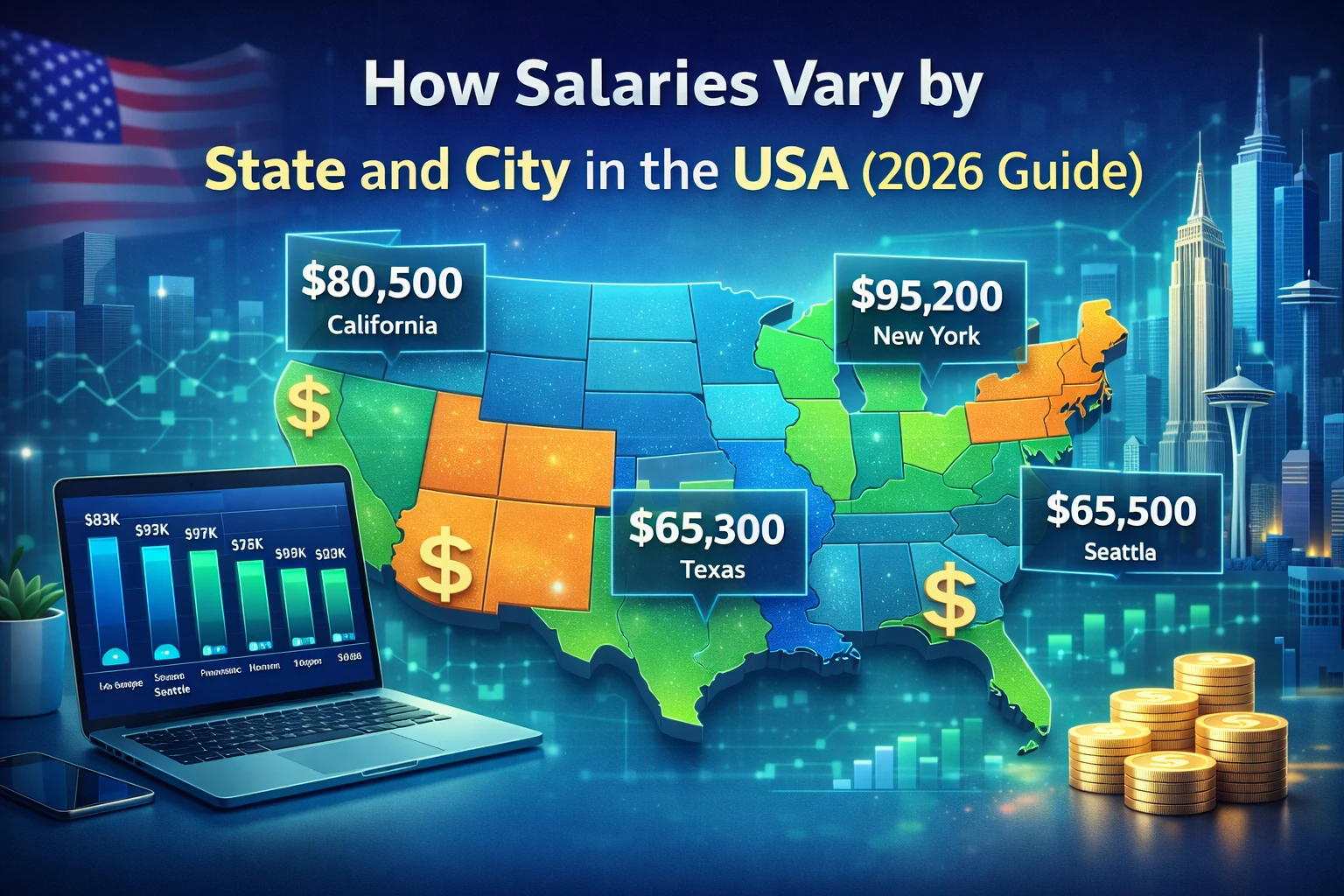
Introduction to Salary Variations in the USA
Salary variations across the United States are a significant aspect to consider for both job seekers and professionals seeking to navigate the complexities of the job market. These variations can be attributed to a myriad of factors including geographical location, industry, cost of living, and education level. Understanding these differences is crucial for individuals aiming to maximize their earning potential and make informed career decisions.
The disparity in salary ranges can be stark, with certain states and cities offering considerably higher compensation for similar roles compared to others. For instance, urban centers such as San Francisco and New York typically present elevated average salaries, driven by a concentration of high-paying industries like technology and finance. Conversely, more rural areas may not match these salary levels, often reflecting a different cost of living and market demand for skilled professionals.
Furthermore, certain industries exhibit specific salary trends that can fluctuate widely between regions. For example, healthcare professionals in metropolitan areas are likely to earn substantially more than those in less populated regions. This factor emphasizes the importance of understanding the intersection between roles, geographic areas, and industry standards when assessing salary prospects.
Analyzing salary variations provides valuable insights that are beneficial not only for job seekers but also for employers aiming to establish competitive compensation packages. The following sections will delve deeper into the nuances of salary ranges across various states and cities. This data-driven exploration will highlight the implications of economic factors, market demand, and societal changes on salary structures across the United States.
Methodology: How Data Was Gathered and Analyzed
The analysis of salary variations across the United States necessitates a rigorous methodological framework to ensure the accuracy and relevance of the findings. The primary sources of salary data include the U.S. Bureau of Labor Statistics (BLS), official Census data, and well-established salary surveys from reputable organizations. By utilizing these authoritative sources, we aim to provide a comprehensive overview of salary trends and discrepancies at both state and national levels.
The U.S. Bureau of Labor Statistics is recognized as a leading provider of labor market information, which includes data on wages across various occupations, regions, and industries. The BLS releases periodic reports that detail salary ranges, median wages, and supplemental data on benefits. This information is essential for understanding the current landscape of employment and compensation in the U.S.
In addition to BLS data, Census data offers invaluable insights through its extensive demographic information, which helps to contextualize salary distributions. This includes factors such as education, age, and geographic location, allowing for a more nuanced interpretation of salary data. Furthermore, reputable salary surveys conducted by professional associations and market research firms complement these official data sources. They often provide specific details on compensation trends, employer practices, and job characteristics that are not always captured by government statistics.
The analysis process involved collecting and synthesizing data from these diverse sources, applying statistical methods to ensure robustness and reliability. Techniques such as regression analysis were employed to identify key factors influencing salary variations. Through this multi-faceted approach, we ensure that the findings are up-to-date, relevant, and provide a thorough understanding of salary variations across the USA.
Comparative Salary Ranges for Key Professions

Salary variations across the United States exhibit striking disparities depending on profession and geographic location. For instance, in the technology sector, software engineers are among the highest earners, with average salaries ranging from $80,000 in some states to upwards of $140,000 in tech hubs like San Francisco and New York City. This variation is influenced by the demand for tech talent, local cost of living, and the competitive landscape of the industry.
Healthcare professions showcase similar disparities. Registered nurses, for example, can expect average salaries from $60,000 in less populated states to over $100,000 in urban areas with higher demand for healthcare services. Cities such as Boston and Seattle provide some of the most lucrative salaries for healthcare workers, largely due to the higher living expenses and increased competition between healthcare facilities.
Moreover, the finance sector also presents notable salary differences. Financial analysts have reported average salaries range from $70,000 to $130,000, depending on the region. Cities like Chicago and New York dominate this sector offering higher remuneration because they are financial epicenters with leading firms seeking skilled professionals.
Tables that display average salaries across various professions and regions illuminate these disparities further. For instance, construction managers may earn between $70,000 to $120,000 depending on their location, demonstrating that even roles within the same industry can have significant salary ranges based on geographic factors.
Understanding these salary variations is crucial for individuals considering career opportunities in different parts of the country. By taking into account the average salaries along with the cost of living, potential employees can make informed decisions that align with their financial goals and professional aspirations.
Cost-of-Living Adjustments by Region
The cost of living varies significantly across different regions of the United States, directly impacting salary levels and expectations. In metropolitan areas such as New York City and San Francisco, exorbitant housing costs, high taxes, and elevated prices for goods and services necessitate higher wages to maintain a comparable standard of living. This phenomenon underscores the necessity for cost-of-living adjustments (COLA) in salary structures, ensuring that employees can fulfill their financial obligations regardless of geographical location.
Conversely, regions with a lower cost of living, such as parts of the Midwest and South, typically exhibit lower salary figures. For instance, cities like Detroit or Atlanta display more affordable housing and basic necessities, which in turn correlates with comparatively lower average salaries. It is essential for job seekers and current employees to consider these disparities, as they reflect not only the economic landscape of these areas but also the varying lifestyle opportunities offered by each region.
To illustrate these differences, a comparative analysis can be employed. Charts and graphs could be used to juxtapose average salary figures with corresponding cost-of-living indices. These visual aids can elucidate the extent to which salary compensation must be adjusted in response to local economic conditions. For example, a software engineer in Silicon Valley might earn upwards of $120,000 annually; however, once adjusted for the high living costs prevalent in that area, their purchasing power becomes comparable to a professional in a lower-cost city earning $80,000.
Understanding these regional salary variations due to cost-of-living discrepancies is crucial for professionals navigating their careers, employers formulating compensation strategies, and policymakers aiming to establish equitable wage standards across the nation.
Metropolitan vs. Rural Pay Differences
The disparity in salary levels between metropolitan and rural areas in the United States is significant, reflecting the impact of urbanization on employment opportunities and wage expectations. Generally, salaries in metropolitan regions are markedly higher than those in rural areas, influenced by a variety of factors including demand for skilled labor, cost of living, and industry presence.
In major cities, industries such as technology, finance, and healthcare tend to flourish, attracting a diverse workforce. Consequently, companies in urban centers are often compelled to offer competitive salaries to attract and retain talent. This competition for skilled workers drives salary levels upward, contributing to a higher average wage in metropolitan areas. For example, according to data from the Bureau of Labor Statistics, urban centers frequently report salary averages that exceed those found in rural locations by up to 20-30% across various sectors.
Conversely, rural regions face distinct challenges such as limited access to high-paying job opportunities and a narrower range of industry options. The economy in these areas is typically more reliant on agriculture, manufacturing, and small businesses, which tend to offer lower salaries compared to their urban counterparts. Additionally, professional jobs and services that command higher wages are often scarce or nonexistent in rural settings.
The implications of these wage differences affect both individuals and the broader economy. Job seekers in rural areas may have lower salary expectations due to the limited availability of lucrative roles. Furthermore, organizations in these regions often struggle to attract qualified professionals, resulting in a talent drain to urban areas where wages are more favorable. As urbanization continues, it is essential to consider how metropolitan areas’ salary advantages and rural regions’ limitations shape both individual career paths and regional economic growth.
Regional Economic Trends Influencing Salaries
Salary variations across the United States can be closely tied to regional economic trends. States and cities experience differing economic conditions that significantly impact salary structures within those areas. Factors such as economic growth rates, unemployment statistics, and the presence of key industries play critical roles in shaping these salary expectations.
In regions experiencing robust economic growth, higher salaries are often correlated with increased demand for skilled labor. For instance, metropolitan areas such as San Francisco and New York City, which are hubs for technology and finance respectively, tend to offer higher wages. This demand stems from a concentration of companies that require specialized skills, thus driving competition for talent, and consequently, escalating salary offers.
Conversely, regions facing economic stagnation or declining industries may struggle to provide competitive salaries. Areas that are heavily reliant on a single industry, such as coal mining in parts of West Virginia, may experience significant salary inversions and job shortages due to economic shifts. As such, the unemployment rates in these regions tend to be higher, further exacerbating the difficulty of obtaining higher-paying jobs. Additionally, these factors contribute to the overall economic disparity observed across different states.
Furthermore, the presence of leading industries can create a ripple effect on the local economy, ultimately influencing salary structures. Cities with diverse work sectors generally demonstrate greater resilience during economic downturns, which allows for a more stable salary landscape. Industries such as healthcare, technology, and education bolster job creation and maintain steady wage growth, ensuring that local economies thrive.
Understanding these regional economic trends is essential for gauging salary expectations and patterns across the country, highlighting how localized economic factors directly affect compensation levels in various areas.
Top-Paying States and Cities: Data-Driven Insights
When it comes to evaluating career opportunities, understanding the geographical variations in salaries is vital. Based on extensive research and data analysis, certain states and cities consistently emerge as frontrunners in terms of compensation across various professions. These insights allow job seekers to make informed decisions about where to focus their career efforts.
The highest-paying states, such as California, New York, and Massachusetts, boast significant salary figures primarily due to their substantial cost of living and concentrated industry markets. For instance, technology professionals in Silicon Valley can expect top dollar due to the region’s reputation as a tech hub. Similarly, finance roles in New York City offer premium salaries as the city is home to numerous major financial institutions.
Furthermore, examining specific cities illustrates notable differences even within high-paying states. Seattle, for instance, has become a competitive landscape for software engineers, rivalling San Francisco as companies like Amazon and Microsoft raise salary baselines to attract skilled talent. According to recent data, software engineers in Seattle average more than $120,000 annually, reflecting the demand for technical expertise.
To further highlight these trends, tables and charts are included in our comprehensive analysis, categorizing salary figures by profession and geographic area. For example, healthcare professionals, including physicians and specialized nurses, often see the highest compensation rates in states such as California and Texas. The data clearly indicates a correlation between the local economy, professional demand, and salary levels.
By leveraging this data, job seekers can identify lucrative opportunities tailored to their skill sets while contemplating relocation. Our extensive resources include updated salary statistics, enabling readers to remain aware of shifting trends across various fields.
Reasons Behind Regional Salary Differences
The varying salaries across different regions of the United States can be attributed to several key factors. Understanding these factors is essential for comprehending the broader economic landscape and how they affect labor markets.
One of the primary reasons for salary variations is the presence of specific industries in certain areas. For instance, tech companies tend to cluster in urban areas such as Silicon Valley or Seattle, which naturally elevates salary scales for tech-related jobs. In contrast, regions with limited industrial presence may offer lower salaries due to less competition for talent. The industry landscape is thus a significant determinant of regional salary levels.
Another crucial factor is the cost of living, which varies significantly across the country. Areas with a high cost of living, such as New York City or San Francisco, often compensate workers with higher salaries to accommodate inflated housing and everyday expenses. Conversely, lower-cost regions may offer salaries that are competitive locally yet appear lesser when compared to national averages. Hence, adjustments for cost of living are vital for accurately assessing salary data across regions.
Moreover, the demand for labor plays a critical role. Regions experiencing economic growth may boast heightened demand for skilled workers, leading to competitive salaries necessary to attract talent. This demand-supply dynamic causes fluctuations in salaries in line with the economic conditions of specific states or cities.
Lastly, educational attainment among the workforce also influences salary variations. Regions with higher rates of college graduates or vocationally trained individuals tend to see higher salary levels. Employers in these areas often adjust their pay structures to secure qualified talent, resulting in disparities when comparing different locations.
Implications for Jobseekers and Professionals
Understanding salary variations across the United States provides valuable insights for jobseekers and professionals in the competitive job market. Salary differences can be influenced by a multitude of factors, including geographical location, industry demand, educational background, and years of experience. Consequently, it becomes crucial for individuals seeking employment or considering a career change to recognize how these factors interplay to affect potential earnings.
For jobseekers, leveraging data on salary variations can significantly enhance their negotiation skills during the hiring process. When equipped with concrete salary information specific to their field and location, candidates can confidently negotiate compensation packages. It is advisable to conduct thorough research, exploring resources such as salary surveys, industry reports, and government data to gather relevant salary benchmarks. Understanding local market trends can also provide candidates with a competitive edge.
Moreover, awareness of salary variation is instrumental for career planning. Professionals contemplating a career transition or advancement within their current field should consider both the potential earnings and the job market’s health in various locations. Identifying high-demand regions or industries can guide individuals in making informed decisions regarding relocations or skill enhancement opportunities. Additionally, staying informed on evolving market trends can aid in recognizing emerging fields with lucrative compensation prospects.
Overall, being informed about salary variations allows jobseekers and professionals to align their career goals with realistic expectations, ultimately paving the way for informed decisions that can lead to more satisfying and financially rewarding career outcomes.